“long grain” search results (2000)

Chinese Coffee Culture Coffee Legend of Zhukula Village, Dali, Yunnan Province
When it comes to the history of Chinese coffee, we have to mention Yunnan Dali Zhukula Coffee, which plays a vital role in the history of Chinese coffee. The ancient coffee forest in Zhukula Village is a unique variety of small-grain coffee in Yunnan. It is very rare and of excellent quality. It can be called a living fossil of Chinese coffee. In today's program, we will explore the century-old coffee legend of Zhukula Village. Zhu
2014-11-19 Coffee culture Chinese coffee culture Yunnan coffee coffee legend
Introduction to the Flavor and taste of Arabica Coffee in China
Arabica coffee accounts for 70% of all coffee production, and Arabica coffee accounts for 70% of all coffee products. its excellent flavor and aroma make it a direct drinkable coffee with only 8 Arabica beans (8). But its resistance to dryness, frost, diseases and insect pests is too low, especially the natural enemy of coffee-leaf rust, so all producing countries are in
2016-07-12 China rabbi coffee planting situation flavor taste introduction domestic native
Coffee Culture the Biography of Coffee in Zhukula Village of Yunnan Province
When it comes to the history of Chinese coffee, we have to mention Yunnan Dali Zhukula Coffee, which plays a vital role in the history of Chinese coffee. The ancient coffee forest in Zhukula Village is a unique variety of small-grain coffee in Yunnan. It is very rare and of excellent quality. It can be called a living fossil of Chinese coffee. We went to explore the century-old coffee legend of Zhukula village. Zhu Kula, located in Yunnan Province
2014-10-14 Coffee culture Yunnan coffee culture
Yemeni Coffee varieties with complete Grain shape and unique Flavor introduction to Fine Coffee beans in Manor
Yemeni coffee originated from Arabian coffee trees hundreds of years ago, all produced in areas above 3000 feet above sea level. For hundreds of years, the unique planting and production methods of Yemeni coffee have remained almost unchanged. The seedlings of Yemeni coffee trees are first cultivated in nurseries and then transplanted to high elevations. Pesticides and fertilizers are not used in the breeding process. Mature coffee beans are naturally dried on coffee trees and shelled by stone grinding.
2016-09-02 Grain shape integrity flavor unique Yemen coffee variety characteristics taste manor
Yemeni Coffee varieties with complete Grain shape and unique Flavor introduction to Fine Coffee beans in Manor
Yemeni coffee originated from Arabian coffee trees hundreds of years ago, all produced in areas above 3000 feet above sea level. For hundreds of years, the unique planting and production methods of Yemeni coffee have remained almost unchanged. The seedlings of Yemeni coffee trees are first cultivated in nurseries and then transplanted to high elevations. Pesticides and fertilizers are not used in the breeding process. Mature coffee beans are naturally dried on coffee trees and shelled by stone grinding.
2016-09-02 Grain shape integrity flavor unique Yemen coffee variety taste characteristics manor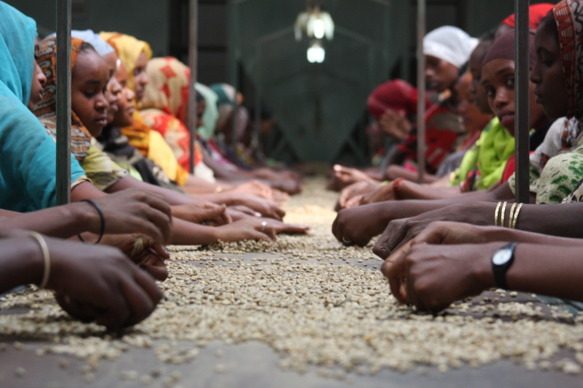
Introduction to the Flavor of Fine Coffee beans with unique Grain shape and complete Yemeni Coffee varieties
Yemeni coffee originated from Arabian coffee trees hundreds of years ago, all produced in areas above 3000 feet above sea level. For hundreds of years, the unique planting and production methods of Yemeni coffee have remained almost unchanged. The seedlings of Yemeni coffee trees are first cultivated in nurseries and then transplanted to high elevations. Pesticides and fertilizers are not used in the breeding process. Mature coffee beans are naturally dried on coffee trees and shelled by stone grinding.
2016-09-05 Flavor unique grain shape integrity Yemen coffee variety taste manor characteristics
Introduction to the characteristics of Blue Mountain Coffee Flavor Manor with full grains of Jamaican Fine Coffee beans
The BLUE MOUNTAIN of Sydney was once praised as the most beautiful place in the world by Queen Elizabeth II of England. Blue Mountain is a long mountain range, covering an area of almost 1 million hectares. The Blue Mountain gets its name from the mountain full of eucalyptus trees (locally known as Gali trees). As eucalyptus leaves emit a strong fragrance from time to time, the fragrant volatile steam is reflected by the sun.
2016-08-10 Granules fuller full Jamaica boutique coffee beans blue mountains coffee flavor mouth
The species of Arabica beans, the classification of Arabica beans, coffee beans, Arabica.
Variety editor native species in all coffee production, Arabica coffee accounts for 70% of the coffee 80%, its excellent flavor and aroma make it the only coffee that can be drunk directly. However, its resistance to dryness, frost, diseases and insect pests is too low, especially the natural enemy of coffee-leaf rust, so all producing countries are committed to variety improvement.
2016-03-17 Rabbi kadou species classification coffee beans varieties editors native all coffee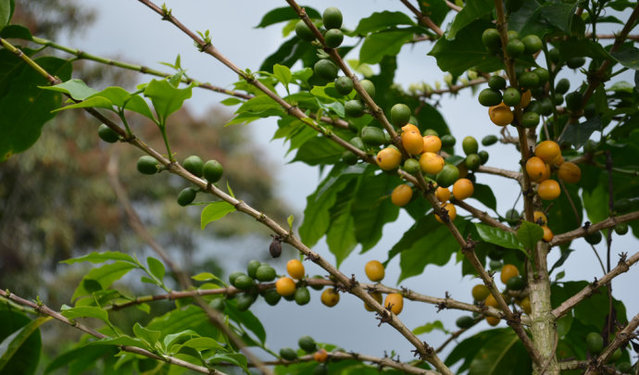
The main varieties of Colombian coffee are Rabe coffee, small grain coffee, American coffee flavor.
The earliest records of coffee cultivation in Colombia appear in a book called The Illustrated Orinoca by Spanish missionary Jose Gumilla. He describes what he saw when he preached on both sides of the Meta River in 1730, in which he mentioned the local coffee plantation. By 1787, other missionaries had spread coffee to other parts of Colombia.
2016-07-14 Columbia Coffee Variety main small Grain America Flavor about Colombia
Qianjie Yunnan Coffee planting Story Yunnan small Coffee Bean Variety Katim Coffee Bean flavor
The skin of ripe fruit is red. Because its shape and color are similar to cherries, ripe coffee fruit is called coffecherry in many places. Under the bright red pericarp, the peel, pulp and a sweet sticky yellow substance wrap the coffee beans. Normally, there are two grains of coffee per fruit.
2023-05-23 One tree coffee several times a year planting
Chinese Coffee Culture the Legend of Coffee in Zhukula Village, Yunnan Province
When it comes to the history of Chinese coffee, we have to mention Yunnan Dali Zhukula Coffee, which plays a vital role in the history of Chinese coffee. The ancient coffee forest in Zhukula Village is a unique variety of small-grain coffee in Yunnan. It is very rare and of excellent quality. It can be called a living fossil of Chinese coffee. We went to explore the century-old coffee legend of Zhukula village. Zhu Kula, located in Yunnan Province
2015-02-09 China coffee culture Yunnan Zhu Kula coffee Zhuan speaking of
Common sense of Chinese Coffee growth Environment and brewing of small Coffee
Small grain coffee scientific name: Coffea arabica family genus: Rubiaceae coffee genus morphological characteristics: small trees or large shrubs, plant height 5 meters 8 meters. Base usually much branched, old branches gray-white. Nodes inflated, young branches glabrous. Leaves thinly leathery-ovate-lanceolate or lanceolate, apex long acuminate, base cuneate or slightly obtuse, entire or shallowly wavy, both surfaces glabrous. Cymes several clustered in leaf axils
2014-12-01 China coffee common sense small grain growth environment brewing scientific name
Columbia Coffee Manor introduces Lazmus Manor Colombian small Coffee
The main varieties of Colombian coffee are small grains of coffee. Plants are small trees or large shrubs, 5-8 m tall, usually much branched at base; old branches gray-white, nodes dilated, young branches glabrous, compressed. Leaves thinly leathery, ovate-lanceolate or lanceolate, 6-14 cm long and 3.5-5 cm wide, tip long acuminate, acuminate part 10-15 mm long, base cuneate or slightly obtuse, rarely rounded, entire or
2016-08-03 Colombia Coffee Manor producing area introduction Raz Moss Xiao Grain
Common sense of Coffee Culture Coffee Legend of Zhukula Village in Yunnan Province
When it comes to the history of Chinese coffee, we have to mention Yunnan Dali Zhukula Coffee, which plays a vital role in the history of Chinese coffee. The ancient coffee forest in Zhukula Village is a unique variety of small-grain coffee in Yunnan. It is very rare and of excellent quality. It can be called a living fossil of Chinese coffee. We went to explore the century-old coffee legend of Zhukula village. Zhu Kula, located in Yunnan Province
2015-03-09 Coffee culture common sense Yunnan Zhu Kula coffee legends speaking of China
Yemeni coffee varieties with unique flavor and complete grain shape introduce the flavor of fine coffee beans in Manor.
Yemeni coffee originated from Arabian coffee trees hundreds of years ago, all produced in areas above 3000 feet above sea level. For hundreds of years, the unique planting and production methods of Yemeni coffee have remained almost unchanged. The seedlings of Yemeni coffee trees are first cultivated in nurseries and then transplanted to high elevations. Pesticides and fertilizers are not used in the breeding process. Mature coffee beans are naturally dried on coffee trees and shelled by stone grinding.
2016-09-01 Flavor unique grain shape complete Yemen coffee variety characteristics taste manor
Common sense of Coffee beans in Yunnan growth Environment and brewing of small Coffee
Small grain coffee scientific name: Coffea arabica family genus: Rubiaceae coffee genus morphological characteristics: small trees or large shrubs, plant height 5 meters 8 meters. Base usually much branched, old branches gray-white. Nodes inflated, young branches glabrous. Leaves thinly leathery-ovate-lanceolate or lanceolate, apex long acuminate, base cuneate or slightly obtuse, entire or shallowly wavy, both surfaces glabrous. Cymes several clustered in leaf axils
2015-03-10 Yunnan coffee beans common sense small grains coffee growth environment brewing
An introduction to the degree of baking in the manor area with a vaguely sweet taste of Chinese iron pickup coffee.
Baoshan: the cultivation of coffee in Baoshan began in the mid-1950s, and the first coffee seedling was introduced by the late patriotic overseas Chinese Mr. Liang Jinshan in Southeast Asia. The local famous Lujiangba small grain coffee is of excellent quality. It was rated as first class in London, England as early as the late 1950s. In recent years, with the expansion of international trade, Lujiangba's small-grain coffee is more famous. Europe, the United States, Afghanistan
2016-09-23 Subtle sweet Chinese pickup coffee flavor taste manor producing area baking
History of Coffee in China the Legend of Coffee in Zhukula Village, Dali, Yunnan
When it comes to the history of Chinese coffee, we have to mention Yunnan Dali Zhukula Coffee, which plays a vital role in the history of Chinese coffee. The ancient coffee forest in Zhukula Village is a unique variety of small-grain coffee in Yunnan. It is very rare and of excellent quality. It can be called a living fossil of Chinese coffee. In today's program, we will explore the century-old coffee legend of Zhukula Village. Zhu
2014-12-26 China Coffee History Yunnan Dali Zhu Kula hundred years Legend speaking of
The Biography of Coffee in Zhukula Village, Yunnan Province
When it comes to the history of Chinese coffee, we have to mention Yunnan Dali Zhukula Coffee, which plays a vital role in the history of Chinese coffee.
2014-06-13 Coffee Culture Yunnan Coffee Coffee Legend
Fine Coffee Science explains the nouns of coffee in detail.
[source] basic source of medicinal materials: seeds of small fruit coffee, medium fruit coffee and large fruit coffee of Rubiaceae. Latin plant animal mineral name: 1.CoffeaarabicaL.2.CoffeacanephoraPierreexFroehn.3.CoffealibericaBul1.exH1en harvesting and storage: the pericarp begins to turn red and can be harvested. The harvest time varies with the species, and the small seeds are collected from September to November and from September to October.
2014-10-16 Coffee knowledge boutique caffeine coffee coffee encyclopedia